 Image 1 of 1
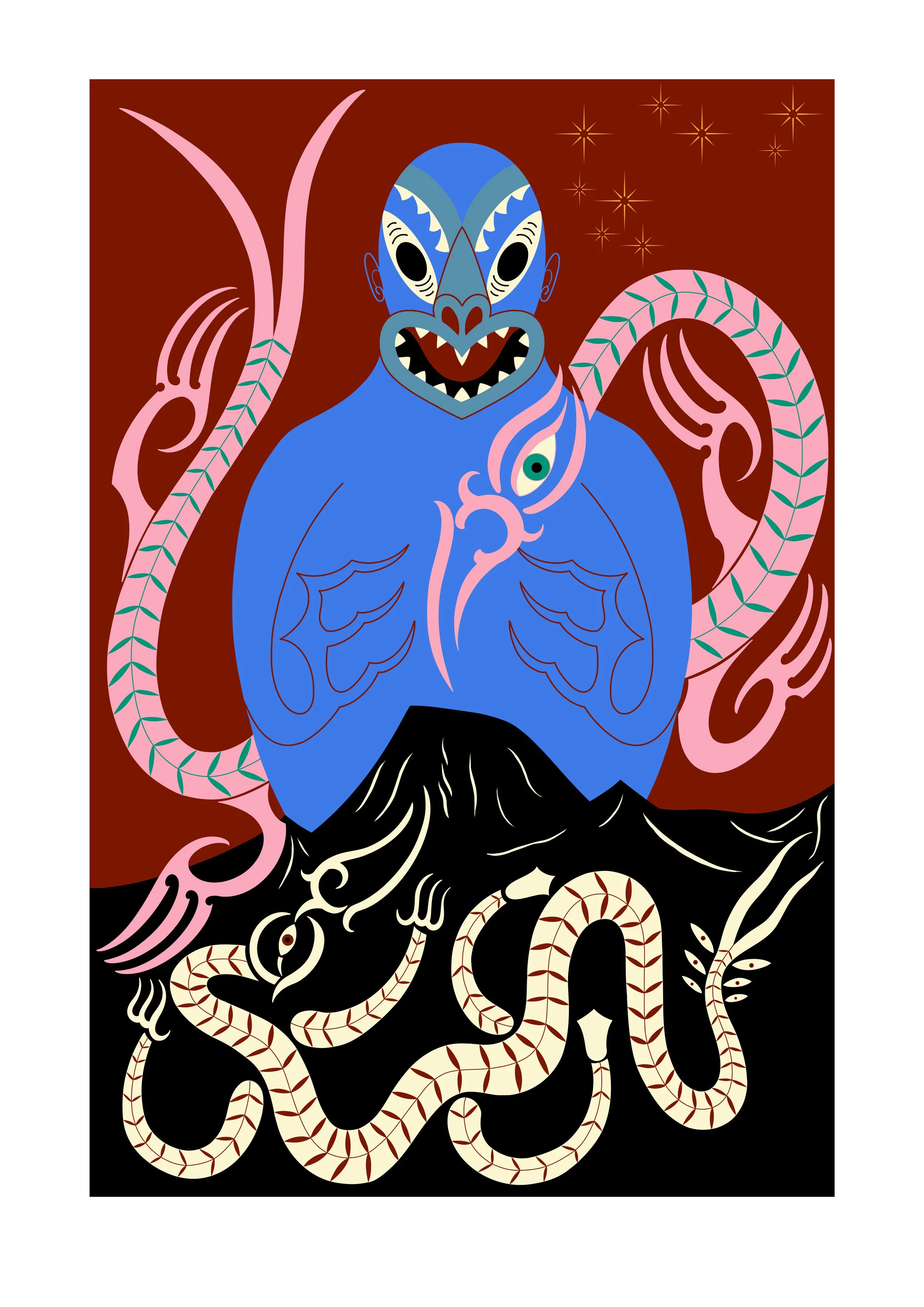
‘Taratara’ Giclée print on textured cotton rag. Limited edition of 30 in all sizes, A4 - A0.
Taratara is a maunga tūpuna of our people, Ngāti Pou and Ngāti Rangimatamāmoe, hapū of Ngāti Kahu ki Whangaroa.
Maunga are revered as ancient kaitiaki, often personified as living ancestors who embody the spirit and presence of the taniwha.
‘Taratara’ tells the story of our maunga tūpuna, Taratara, standing alongside his two wives, Okaha-hiria and Turou. Together they represent the enduring connection between our people, our ancestors, and the whenua, while acknowledging the many tūpuna whom Taratara has watched over and protected throughout the generations.
Traditionally, the kōiwi of our most esteemed rangatira were placed within waka kōiwi. These sacred taonga were then entrusted to the ana of our maunga tūpuna, where they were protected and honoured.
Following the arrival of early European visitors to the region, many of these caves were raided and their contents removed. The desecration of these sacred resting places resulted in the loss of precious ancestral remains and taonga. For many years, our hapū and iwi have been engaged in the ongoing process of repatriation, working to return these treasured tūpuna and taonga to their rightful home, restoring both their mana and the connection between our ancestors and their descendants.
‘Taratara’ Giclée print on textured cotton rag. Limited edition of 30 in all sizes, A4 - A0.
Taratara is a maunga tūpuna of our people, Ngāti Pou and Ngāti Rangimatamāmoe, hapū of Ngāti Kahu ki Whangaroa.
Maunga are revered as ancient kaitiaki, often personified as living ancestors who embody the spirit and presence of the taniwha.
‘Taratara’ tells the story of our maunga tūpuna, Taratara, standing alongside his two wives, Okaha-hiria and Turou. Together they represent the enduring connection between our people, our ancestors, and the whenua, while acknowledging the many tūpuna whom Taratara has watched over and protected throughout the generations.
Traditionally, the kōiwi of our most esteemed rangatira were placed within waka kōiwi. These sacred taonga were then entrusted to the ana of our maunga tūpuna, where they were protected and honoured.
Following the arrival of early European visitors to the region, many of these caves were raided and their contents removed. The desecration of these sacred resting places resulted in the loss of precious ancestral remains and taonga. For many years, our hapū and iwi have been engaged in the ongoing process of repatriation, working to return these treasured tūpuna and taonga to their rightful home, restoring both their mana and the connection between our ancestors and their descendants.